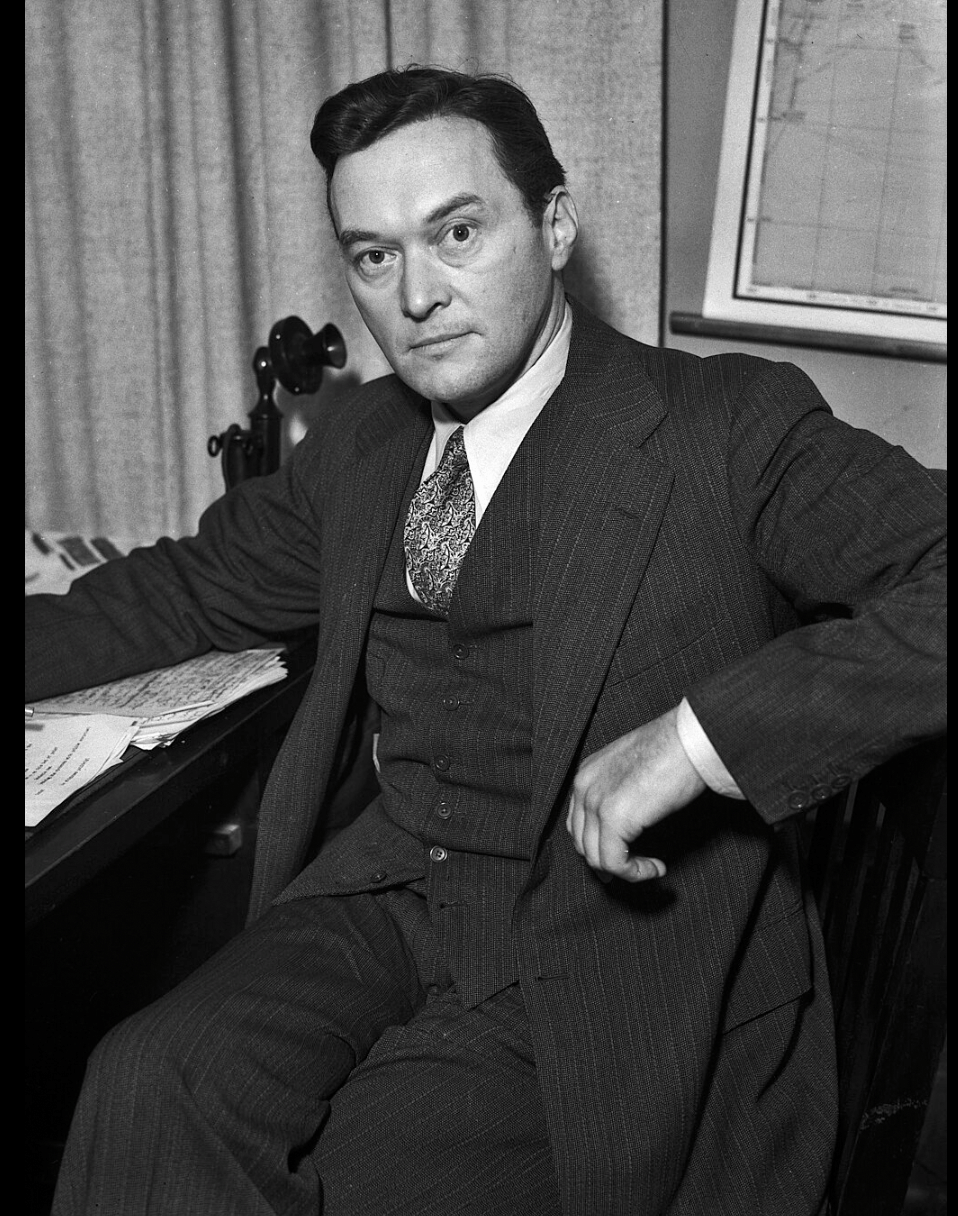
“There can be no liberty for a community which lacks the information by which to detect lies” (Kovach & Rosenstiel 2021, Introduction). The journalistic world Walter Lippmann commented on nearly a century ago was very different than our current mediated environment. His criticism and analysis on foundational elements of journalism and news gathering however, remain relevant.
The concept of objectivity in the news has evolved over the last century when it was first associated with the field. At the time, it marked a key turning point in how journalists defined their societal role and how they went about ethically providing news to the public. However, the failure to refine and define the concept as the realm of journalism changed with advancing technology and societal norms has rocked the foundation of public trust that journalism relies on. The current trend of distrust and blatant disregard of information from journalistic sources has much to do with reporter’s failure to be transparent and confusing the concepts of neutrality with objectivity in reporting, allowing for claims of subjectivity and agenda-setting to invade public thought.
To refocus the field, journalists must be willing to work with the public transparently. This encompasses the redefinition of objectivity as a science-adjacent method utilized by journalists and news gathers allowing for the most complete, contextualized version of facts.
By reemphasizing transparency and diversity of thought in the workplace and the field, media spaces will offer the public a broader, more in-depth representational perspective of news and the complexities of truth. This redefinition will change the current trend of newsrooms from a politically charged rhetoric to a collaborative, public-serving contextualized information center, leading to a more trustworthy holistic approach to news and a healthier relationship between journalists and the public.
Objectivity, originally a concept associated with the social sciences, became associated with reporting methodology in the early twentieth century as the attitude towards journalistic realism turned skeptical. Proponents of a realist approach argued that by simply presenting and ordering the facts, the truth would naturally assert itself (Kovach & Rosenstiel 2021, Introduction). This concept replaced the advocacy models of the colonial press and the sensationalism of William Randolph Hearst and Joseph Pulitzer (Kovach & Rosenstiel 2021, Introduction). The importance of independent journalism became an essential factor in the burgeoning conversation around the democratic role of the news. The eventual culmination of geopolitical tensions into World War I and the Russian Revolution forced reporters to reconsider how their perspectives colored their work.
Twentieth century figures like Lippmann and his contemporary Charles Merz, associate editor for the New York World, championed a redefinition of ethical journalistic methodology that ensured accurate coverage unfettered by a reporter’s preconceptions (Kovach & Rosenstiel 2021, Introduction). The myth of the neutral, disinterested reporter is a misinterpretation of the journalistic reform Lippmann and Merz called for.
“Objectivity was not meant to suggest that journalists were without bias. To the contrary, precisely because journalists could never be objective their methods had to be… the news, like science, should flow from a process that is defensible, rigorous, and transparent,” (Kovach & Rosenstiel, 2021, pg. xxvii).
A consequence of this interpretation of objectivity is a reporter’s use of a ‘neutral voice’ that masks bias or self-censures. Reporters may omit characteristics of a story out of fear of seeming subjective, without considering that the very omission may introduce a flaw in a story that hinders the public’s true understanding of events (Schudson 2019). Journalism’s reliance on this passive, ‘neutral’ reporting voice has created grey area around the very idea and definition of objectivity.
This definition and understanding leads journalists to falsely believe themselves insulated from bias in their reporting. The main danger of the ‘neutral’ voice is that under the guise of disinterestedness bias is still present and active. This has created our current news culture of public distrust of the media and reporters due to the perceived ambiguity of voice and method.
The 2020 Black Lives Matter protests over the death of George Floyd further highlighted the importance of continued conversation and refinement of journalistic objectivity. Julie Gerstein and Margaret Sullivan contended that if a journalist, through the research and investigative process, comes to have a perspective on the topic, it doesn’t harm the integrity of the work. Gerstein and Sullivan point to newsrooms, journalists and other media professionals that altered policies that outlined objectivity in the wake of Floyd’s death. The outlet Axios sent employees a memo reiterating their support and encouragement of staff members to actively participate in the controversy (Gerstein, & Sullivan 2025). Gerstein and Sullivan used this case to contend that in some instances, stories may become stronger if journalists incorporate their definitive tone and stance (Gerstein & Sullivan 2025).
Despite the reasoning behind these organizational decisions and Gerstein and Sullivan’s arguments, the complete abandonment of objectivity may lead to an even further erosion of public engagement and trust. An increased focus on perspective-driven reporting may widen the already yawning political chasms that polarize American citizens. The divisive nature of the internet has played an important role in the continual disillusionment of the public toward journalism and the news (Kovach & Rosenstiel, 2021). As the advertising business models supporting journalism collapsed, many journalists and organizations capitalized on the division in order to stay afloat (Schudson 2019). These situations, where objectivity has devolved into an aggressive, advocacy-based approach, have further muddied the outlines of fairness, balance and objectivity in reporting.
Defining and developing a collective, modern journalistic approach to objectivity will go a long way toward ending the dismantling the ambiguity threatening to derail the very democratic function American journalism is supposed to perform. The press needs to recommit itself to an actionable plan, creating a more clear, cohesive definition of journalistic objectivity bolstering trust in media and enabling reporters and news gathers to uphold the standard and quality of their work that the public requires.
By creating a culture of transparency and diversity of thought in the newsroom, objectivity of method and a more accurate understanding of multifaceted truth in reporting would follow. As Gerstein and Sullivan state, the completely unbiased journalist with a ‘view from nowhere’ is a myth (Gerstein & Sullivan 2025). Although perspective in the newsroom could be an asset if responsibly handled, transparency about a journalist’s perspective, allowing readers to understand where an individual is coming from while writing, will allow readers to take their own unavoidable small biases into consideration and refrain from passively swallowing information colored by different views. This would also allow for a more in-depth array of contextualized information, discouraging organizational or political agendas, another major factor in decreasing public trust.
By committing to these approaches and redefining the importance of method and the scientific, journalistic process anew, citizens will be equipped to actively consume and sift through information, as well as grasp the importance of news gathers in the health and functioning of democratic society. A collaborative approach from journalists would be a step toward healing the political and social rifts currently enhanced by media and harming citizen and journalist alike.
If we as journalists, at the individual and organizational levels, commit to these changes and the reclamation of objectivity as collaborative, transparent, and multifaceted, we will create and equip a more discerning public, and a healthier, more functional journalism will be our reward.
Works Cited
Gerstein, J., & Sullivan, M. (2025). Is objectivity in journalism still worth pursuing?. Columbia Journalism Review. https://www.cjr.org/analysis/is-objectivity-in-journalism-still-worth-pursuing.php
Schudson, M. (2019). The fall, rise, and fall of Media Trust. Columbia Journalism Review. https://www.cjr.org/special_report/the-fall-rise-and-fall-of-media-trust.php
Kovach, B., & Rosenstiel, T. (2021). Introduction. In The Elements of Journalism (4th ed.). introduction, Crown.
Kovach, B., & Rosenstiel, T. (2021). Journalism of Verification. In The Elements of Journalism (4th ed., pp. 100–155). essay, Crown.
Kovach, B., & Rosenstiel, T. (2021). Truth: The First and Most Confusing Principle. In The Elements of Journalism (4th ed., pp. 42–68). essay, Crown.
Kovach, B., & Rosenstiel, T. (2021). What is Journalism For? In The Elements of Journalism (4th ed., pp. 3–41). essay, Crown.
 Tyler Leatherman Portfolio
Leave a comment