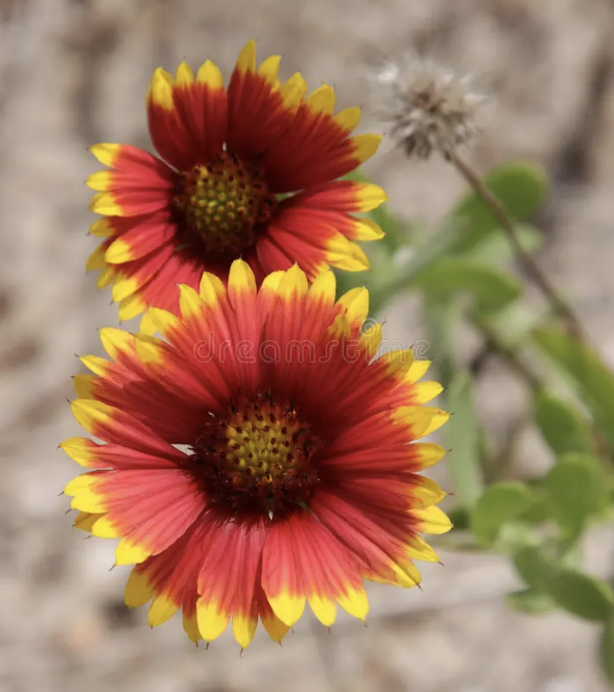
Indian Blanket, also called Firewheel, is a recognizable wildflower native to the Southwest and Great Plains region of the U.S. Aggressively self-seeding, the flower has naturalized throughout much of the country. There are about 25-30 species of Gaillardia, which is a genus within the Asteraceae family. The showy, bicolored discs can grow upright or closer to the ground. The Latin species name, pulchella, means summer, referring to it tendency to grow in the soft sand along beach walkways. The flower has a long rich history among Native American tribes, with its unique color and structure of Indian Blanket contributing to its prominent place in tribal folklore.
An ancient Mexican legend states that these flowers were once the darlings of the Aztecs, revered for its beautiful, bright yellow color. Children would play among them, men and women would adorn themselves with the cheerful, sunny blooms.
When Cortez and his conquistadors came from Spain, wreaking havoc, chaos, and destruction, the noble Aztecs were defeated, the people almost decimated. The yellow flowers, heartbroken for the fate of their human friends, caught the blood of the wounded as it fell, dying the center a deep red.
A different story was passed down among the northern plains Native Americans, depicting an alternate version of the wildflower’s origin.
The wife of a brave warrior, anxious for her husbands safety, wove a thick woolen blanket, the red, orange and yellow pattern a mute prayer to the Great Spirit to protect and guide her beloved.
On the eve if his expected return to the village, his young daughter got lost while playing in the woods. She wandered deeper and deeper into the forest as night rapidly fell. Cold and afraid, but too tired to journey further that night, she lay in a clearing to rest and wait for daylight. As she shivered, alone among the trees, she silently wished she had her mother’s beautiful blanket to keep her warm.
When the young girl awoke, she was covered in beautiful red and yellow flowers, the pattern of the blanket echoed on the delicate petals.
The warrior, returning from battle, came upon his daughter in the forest, and was amazed by her story. From that time on, the little blooms were called Indian Blanket, and were respected by every member of the tribe.
Today, the pretty wildflower is commonly seen in gardens, as they attract a wide variety of native bees and butterflies.
 Tyler Leatherman Portfolio
Leave a comment