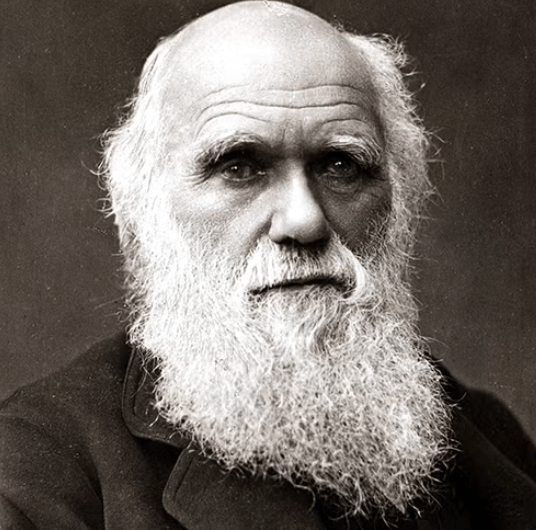
In 1859, a young Englishman published a book that shook the foundations of society in the mid nineteenth century, causing mass uproar and wild speculation. He presented an idea, a theory, that would become one of the most polarizing, hotly contested scientific contributions in history.
On the Origin of Species by Means of Natural Selection, written by Charles Darwin after his journey around the world on the HMS Beagle, is today considered a classic, a dissertation that continues to be analyzed and commented upon almost two hundred years after its publication.
The main argument of Darwin’s theory is Natural Selection, the idea that organisms adapt across generations to better inhabit their native environment. The plant/animal/organism that does evolve and change in this way survives to produce offspring that, like its parent, are better fit to occupy a particular niche. The organisms that do not adapt, die off, and initial adaptation gradually becomes normal across the species.
The Darwinian Theory of Evolution is based on four key principles: Overproduction, the Struggle for Existence, Inheritance and Accumulation of favorable variation, and Survival and Reproduction of the fittest.
One of the reasons why Darwin’s theory has been the subject of so much misunderstanding, is though a lack of differentiation between fact and theory across scientific fields. The term Organic evolution, the accumulation of heritable genetic traits that enable species adaptation, has been coined to address the problem. Evolution is a theory, science deals with probabilities, the hypothesis and explanations for the world around us are constantly changing and growing as we learn and advance technologically as a society.
The publication of The Origin of the Species, marked the beginning of the first evolution revolution. The book affected, not only biology, but psychology, anthropology, the arts, and literature. Darwin’s famous voyage on the Beagle, allowed him to document evidence to support his hypothesis, and his description of natural selection as a plausible mechanism for evolution was groundbreaking among the scientific circles.
The second revolution happened 70 years later, in the 1930s, when scientists combined Darwinian natural selection theories, with their new understanding of Mendelian and population genetics. Scientists discovered the mechanisms behind heritability (genes found on chromosomes) supported the idea that adaptations could be passed down to younger generations, and the intersection of these phenomenon characterized the era as a breakthrough in scientific thought and reasoning.
We are currently in our third evolution, nicknamed Evo-Devo, or era of evolutionary development. The technology modern scientists, students, and researchers have access too has paved the way for many important and significant discoveries. This new knowledge enables us to address ecological problems worldwide and create plans for the future care of the environment.
Evolutionary theory influences many fields of research, and characterizes a lot of our interactions with the natural world. In agriculture, scientists use their knowledge of these principles to research insects that have developed genetic resistance over time to human concocted pesticides. These evolutionary biologists search for ways to combat the variability of the harmful pests, while working to find earth friendly alternatives to chemical sprays and toxins.
In a similar vein, some bacterial and viral diseases have evolved to be potent beyond the use of known antibiotics or drugs. Researchers in this field work to isolate the strains of these infections, and fight them, while remaining wary of accidentally immunizing more viral illnesses against our inoculations and remedies.
These are only some of the ways in which evolutionary methods have shaped our understanding and interaction with nature, but there are still flaws in the theory, and new arguments are constantly challenging the Darwinian ideology.
 Tyler Leatherman Portfolio
Leave a comment